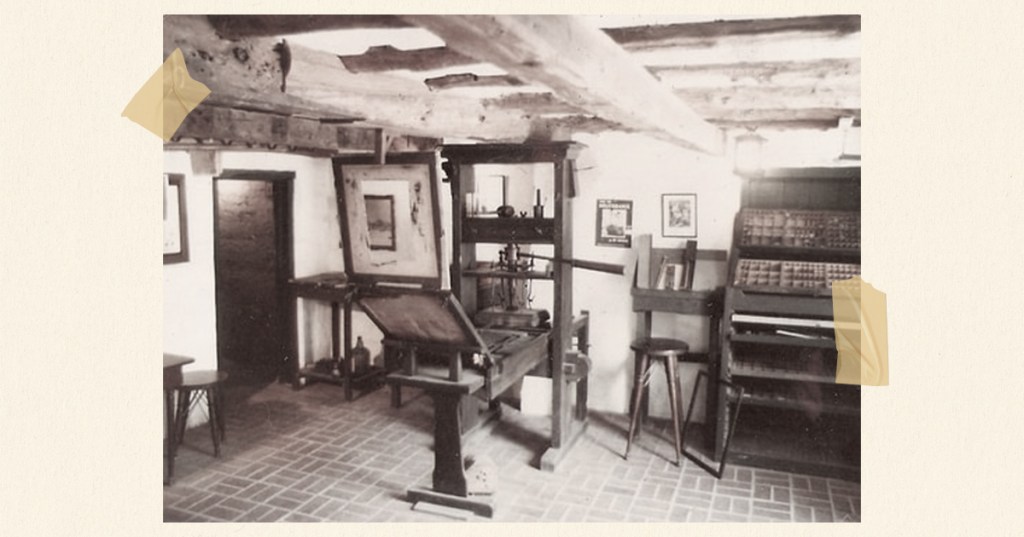
Simply put, letterpress is an old printing method which involves transferring ink from a raised surface onto a sheet of paper to create a relief impression. Whilst methods of relief printing can be traced back to ancient China, letterpress printing itself began with Johannes Gutenberg’s invention of the moveable type printing press in the mid-15th Century. By applying the idea of relief printing to moveable type, printed text developed, revolutionising the way books and other printed matter were reproduced, making them far more accessible to the masses.
Over the centuries, letterpress evolved and although the design and mechanics of some presses were modified to include ink rollers, motors and automated paper feeds, the core principles of Gutenberg’s press process remained at the heart of letterpress printing for over three hundred years.
The demise of letterpress began with the development of new printing technologies at the beginning of the 20th century. The introduction of offset lithography, a printing process that transfers an image from a plate to a rubber roller, then to paper, proved more efficient for mass production and letterpress printing became less commercially viable and therefore largely redundant. Letterpress continued but largely within the realms of high-end, fine printing alone.
Analogue Craft in a Digital Age
Today, letterpress printing is enjoying a revival, particularly among artists and designers. I, like many others, am drawn to the its physical process, tactile nature and honest qualities, especially as the world becomes ever more digital and manufacturing increasingly cheap. As an illustrator, I have always favoured analogue practice over digital and consequently, Alex & Olive designs always begin life on paper. I want my art to reflect the inherent qualities of the materials I use and the nuances of my artistic handwriting that make it human and unique, after all it’s these qualities that give Alex & Olive products their distinctive style!
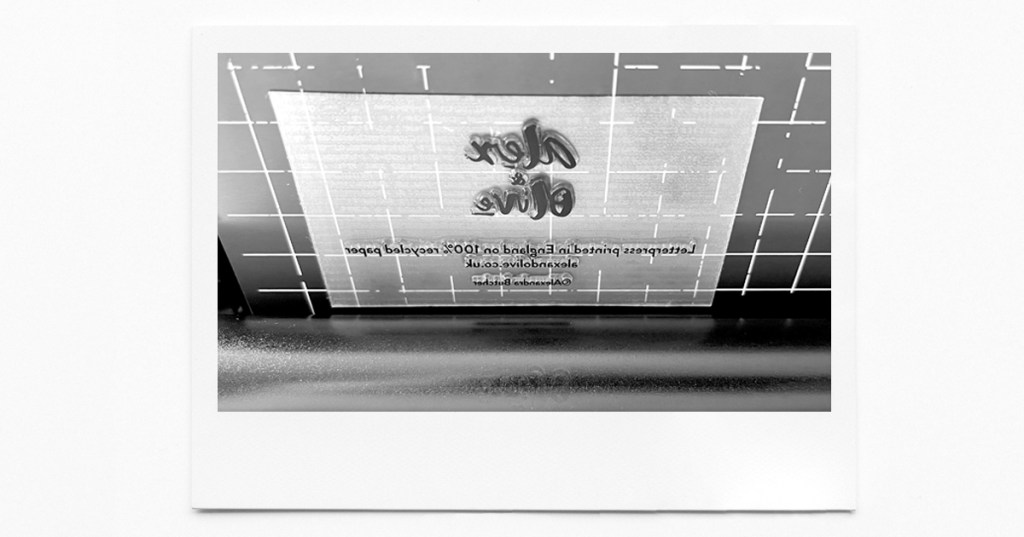
Letterpress printing is still an endangered craft in its truest form, but thanks to modern technologies like photopolymer plates, letterpress is now more accessible, versatile and cost-effective. Photopolymer plates offer a modern alternative to the traditional task of typesetting. They allow for digital type and imagery to be put onto a single plate to be printed from rather than being set in blocks letter by letter. Here at Alex & Olive, we primarily use photopolymer plates to print our greeting cards because of their versatility and ease of use. Although, this inevitably involves a degree of digitalisation, we work hard to keep it to a minimum to stay as true to the original design as possible. We do hold a limited amount of lead type that we inherited with the press and are keen to utilise it whenever possible. Letterpress printing’s obsoleteness makes the acquisition of original letterpress materials a timely and expensive undertaking but we are keen to expand our type collection in the future and incorporate more traditionally set type into our paper products to stay truer to the craft and ensure its existence for years to come.
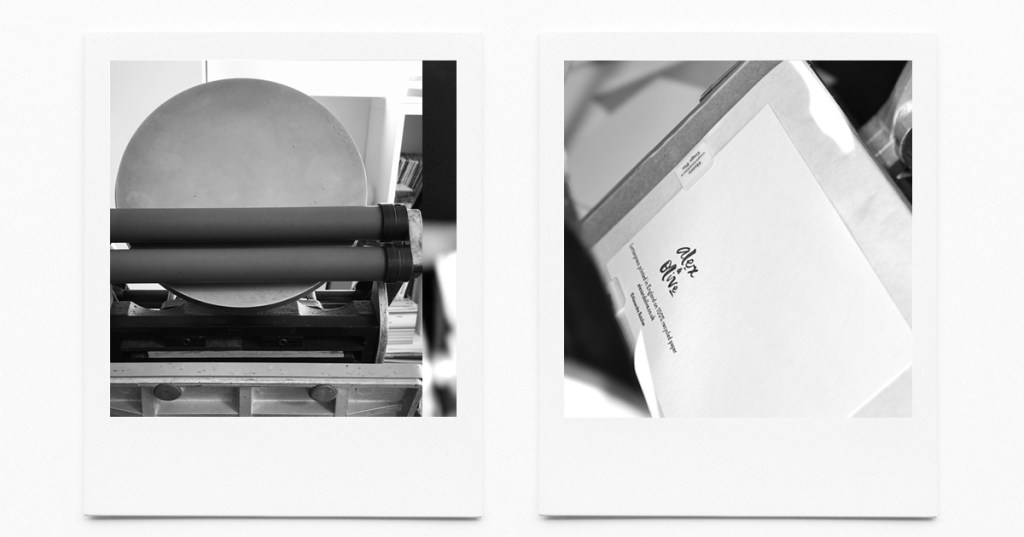
Our Olive: The Adana Tabletop Press
Alex & Olive is a creative partnership between illustrator and letterpress respectively. Olive is an Adana Eight-Five tabletop letterpress built sometime in the 1960s by the Adana Agency, which was founded by Donald Aspinall in 1922. The Adana Agency manufactured printing presses until they went into liquidation in the late 1980s when the company was absolved by Caslon Ltd, who still supply the printing community today. The Adana printing machine is a simple, hand-operated platen press, still highly regarded by letterpress enthusiasts and considered an iconic piece of printing history. The Adana Eight-Five was largely marketed as a press for amateurs and hobbyists and used to print smaller stationery like business cards and invitations. The ‘Eight-Five’ equates to the size of the chase – the area that holds the type, which measures 8 x 5 inches. Its small size does create some design and print limitations for us, but these constraints serve to reinforce the simple, ‘less is more’ aesthetic that makes Alex & Olive’s signature style, as well as allowing space for the thick recycled paper we thoughtfully source, to shine. Letterpress printing is more than just text and imagery, it’s a sensory experience that resonates on a deeper, personal level and that’s why we love it so much.
There are many wonderful crafts people throughout the UK (and world), keeping the heritage craft of letterpress alive and relevant even in this digital age – here are just a few from the UK to explore ☞
https://www.theletterpresscollective.org/
And finally…
I wanted to share the official trailer for the feature length documentary about the survival of letterpress printing – Pressing On: The Letterpress Film. It is, as perfectly described in the summary, – “on-screen visual poetry”.
 Alex & Olive | Letterpress-printed paper goods
Leave a comment