Our Commitment To Sustainability
Earth Day is a global movement observed annually on April 22nd. The day aims to highlight the importance of protecting the environment and is now actively observed by over 1 billion people through a wide range of events co-ordinated globally through EARTHDAY.ORG
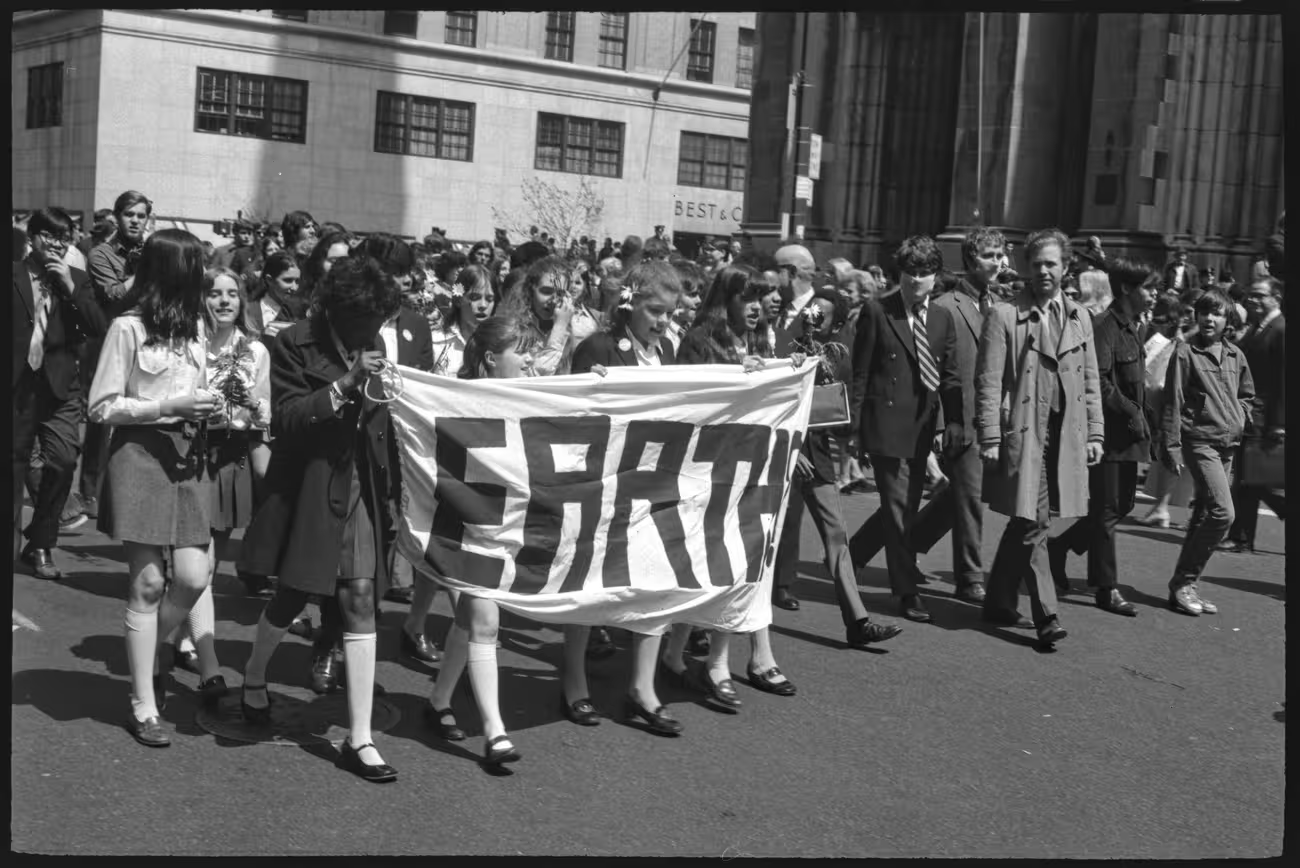
The first Earth Day was celebrated in 1970. It began as an idea by Senator Gaylord Nelson, a junior senator from Wisconsin, USA who had long been concerned about the deteriorating environment in the United States. He wanted to channel the energy of the student anti-war movement that emerged during the Vietnam War and use it to raise awareness about the issue of air and water pollution. Nelson recruited young activist and Harvard student, Denis Hayes to organise campus teach-ins and build wider public awareness and support for the cause. April 22nd was chosen because it was a weekday that fell between Spring Break and Final Exams, thereby offering the best opportunity for maximising student participation. It saw the mobilisation of high school students across America and inspired 20 million Americans to take to streets, parks and concert halls to demonstrate against the impact of 150 years of industrialisation. The first Earth Day led to the creation of new environmental laws and by the end of 1970, the U.S government had created the Environmental Protection Agency; the Clean Water Act followed two years later.
On Earth Day 2016, world leaders from 175 nations signed the Paris Agreement to tackle climate change. In doing so, they pledged to try to prevent global temperatures rising by more then 1.5C above pre-industrial levels by reducing greenhouse gas emissions by 45% by 2030 and achieving net-zero by 2050.
Fifty-five years on from its conception and the Earth Day environmental movement is more important than ever. We are now in the grips of a climate crisis and sustainability is now at forefront of the mind for consumers and businesses alike and rightly so. Therefore, we thought we would use Earth Day 2025 to tell you about how we align our products with our environmental values and why Alex & Olive greeting cards are a more conscious choice.
The Sustainable Choices We Are Making –
Here at Alex & Olive, sustainability has been a core value since day one. As a product based business, we take our environmental responsibilities very seriously and go to great lengths to ensure that our products leave as little an impact on the environment as possible. By nature, greeting cards are often a short-lived product so their recyclability is imperative. Luckily, paper is the most recycled material in the UK and Europe but its recyclability is compromised by the use of some print finishes such as flitter/glitter, foiling, UV inks and varnishes. Sadly, these are still the finishes of choice for some greeting card publishers despite the challenges that they pose when it comes to recycling. As a responsible greeting card publisher, we want to be as transparent as possible about the processes and materials we use to make our products so our customers can make an informed choice about whether to support what we do.
Production
Firstly, it is no accident that we have chosen to produce our greeting cards by hand. Not only because we love the craft of letterpress but because we value the low and slow production process that it dictates. We are a brand powered by humans and in a fast-paced, ever-increasing digital world we are proud to champion a slower way of being that reconnects us to the physical. Producing by hand also allows us to better control our stock because we only print what we need, thereby reducing waste. Our cards are designed, printed and shipped from our studio in Surrey and we source all our materials from UK based businesses.
Paper & Ink
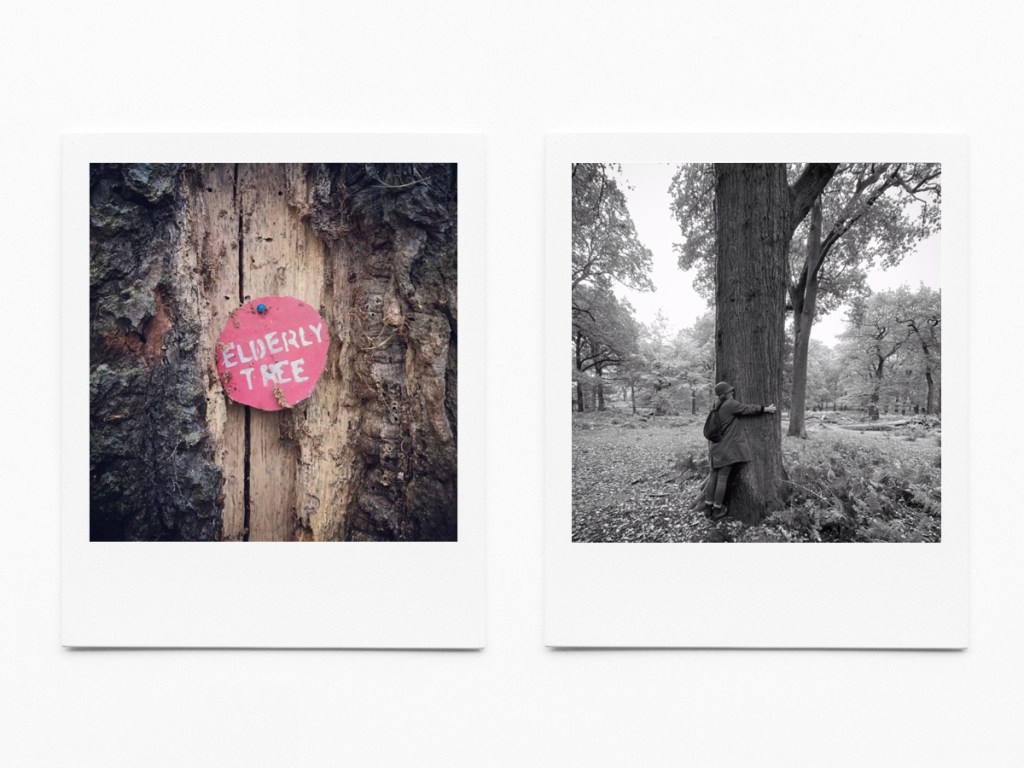
Alex & Olive greeting cards are produced using 100% recycled paper as standard. This commitment was an easy one for us because quite simply, we love trees and we want to preserve as many as possible. Paper is such an easily recycled resource that growing trees to cut them down just feels unnecessary and counterproductive to us. There is no getting away from the fact that paper production requires a supply of virgin fibre; without it recycled paper wouldn’t exist. Therefore, unless we choose tree free alternatives such as cotton (which has its own environmental challenges), the felling of trees to make paper is an uncomfortable reality. In the UK and Europe most of the wood fibre used by the paper industry comes from FSC®️-certified forests. The Forest Stewardship Council®️ or FSC for short, is an international, non-governmental organisation dedicated to promoting responsible management of the world’s forests. It has grown to become the world’s most respected and widespread forest certification system and has become an industry standard for greeting card publishers. Even so, Alex & Olive have chosen to commit to using only 100% recycled papers for our cards and envelopes because we feel it is the right choice for us and the planet. Paper can be recycled up to seven times (recent studies have shown this is in fact an underestimation) and we love the idea that our cards have had a previous life and in turn will live on again.
Our commitment doesn’t come without a conflict of conscience though. The paper we use is produced in Germany – not ideal because of the carbon footprint associated with that. Of course, the ideal option would be a 100% recycled paper milled in the UK but unfortunately there isn’t a similar UK alternative at present. However, the paper we use is not only FSC®️ Recycled but has an additional Blue Angel certification which is an environmental label in Germany awarded to particularly environmentally friendly products.
When it comes to ink, we have also opted for a more sustainable option. Letterpress inks are commonly categorised by their base – oil-based, rubber-based and acrylic based. At Alex & Olive, we have chosen to print with vegetable oil-based inks because they are offer great results while being less harmful to the environment. Letterpress printing is a messy business! When it comes to cleaning up Olive, we like to keep the use of solvent cleaners to a minimum. Most of our cleaning is done using vegetable oil and then finished with a low-VOC cleaner. We utilise newspapers, paper towels and cotton rags; repurposing and reusing wherever we can.
Packaging
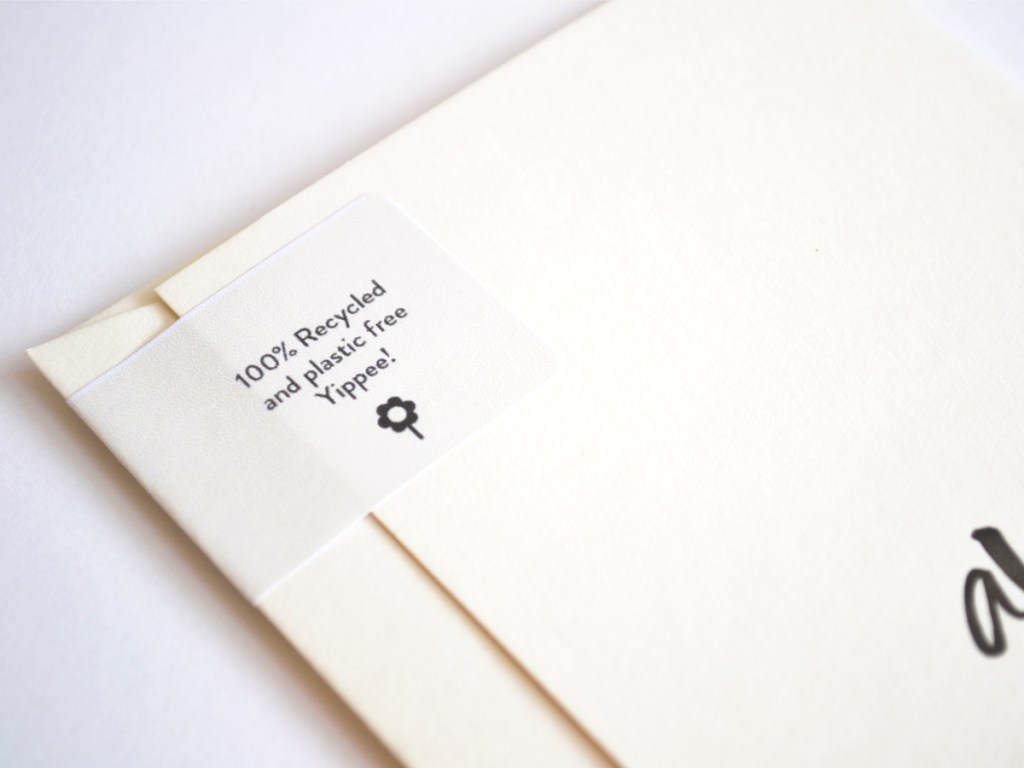
Here at Alex & Olive, we pride ourselves on simple design and a’ less is more’ perspective, and this extends to our packaging. Packaging waste makes up a large share of overall waste generation and this is largely avoidable if we make conscious efforts to reduce the propensity to over package. A shocking 40% of plastic waste is from packaging! We are proud to be plastic free and prefer to present our cards naked, offering biodegradable cello bags on a request basis only. Letterpress is a sensory, tactile experience and we want our customers to connect with our products and feel the difference in the handcrafted quality of our work. Careful consideration is given to the supplies we use for shipping, from recycled and recyclable boxes and envelopes to paper tape and compostable stickers – every aspect of our operation is considered with the planet in mind.
Earth Day serves as a reminder to us to put the planet first and keep taking individual actions to protect it. Fifty-five years on and its message is more relevant than ever. Alex & Olive is proudly upholding the values of the handcrafted because we believe you are what you give and we should all gift better – for a better us and a better planet.
And finally…
Here are some useful links:
www.gca.cards/greeting-cards-and-the-environment-into-a-greener-future/
 Alex & Olive | Letterpress-printed paper goods
Leave a comment